Tuesday, March 13, 2007

WBW #31 -- Box Wine & Non-Traditional Packaging

Nine good friends,
five boxes of California Pinot Grigio
in plain brown wrappers,
and one enormous pot of soup


The theme of today's Wine Blogging Wednesday #31 (Box Wines and Non-Traditional Packaging) offered a great excuse to seek out some of the more interesting top-end boxed wines on the market. And we did seek; but alas, we did not find.

I am often able to find interesting boxed wines when I travel, but I've done no travelling this month. So we shopped locally, but unfortunately, here at the end of the road in this coastal backwater which we call home, there was not much of great interest to be found.

I made some special requests of my local wine merchant, Wanda. She tried in vain to procure the Dtour Macon-Villages Chardonnay, the Cuvee de Pena from Chateau Pena, La Petit Frog Picpoul de Pinet from Hugues Beaulieu, Toad Hollow's Le Faux Frog Pinot Noir, or anything surprising and new to me. But she struck out at every turn. She had even run out of a Cotes du Rhone 3L box which had been a staple in her shop for months.

Instead, I determined that I would create interesting experience of another sort out of a collection of boxed wines from the group which I refer to as the "usual suspects" (the Californian and Australian bag-in-box wines that can be purchased locally in the big-box stores and better supermarkets). Ultimately, at the eleventh hour, I purchased every brand of Pinot Grigio 3 liter box to be found within 50 miles, and sat down with eight friends to compare them. (I regret that I could not find the PG from Black Box Wines).

Five boxes of wine sat in a row on the counter, anonymously wrapped in brown paper. A great pot of Chicken and Artichoke Heart soup simmered on the stove. The crowd was quite an interesting assortment, including a couple of writers, a chef, a few carpenters, some self-proclaimed winos, and a retired professor of bio-psychology / sensory psychology from SUNY Albany who is, in short, an academic professional wine taster. The comparison of our varied individual opinions was even more interesting than the comparison of the wines themselves.

The five wines (in alphabetical order):

Corbett Canyon 2006 Pinot Grigio, $8.99. This wine pretty much tied for top pick among the group, much to the surprise of our attending expert, who placed it near the bottom of his list. Four members of the group picked this as the favorite, and four more as second favorite. Positive comments: "like this one; more body; keeper" ... "good; favorite" ... "light & refreshing; slightly acidic" ... "a bit sweet; complex"
Negative comment:
"no bouquet; light violet flavor; acidic; weak finish; NO (would not buy)"

Delicato 2005 Pinot Grigio, $17.99. This wine generally made the bottom of the list, with seven members of the group placing it as least or second to least favored. One of our tasters, however, rated it second pick.
Positive comment: "yes; keeper"
Negative comments:
"no bouquet; flat to light flowery; no finish; NO (would not buy)" ... "not a lot of flavor" ..."yuck" ..."not much body or flavor"

FishEye 2005 Pinot Grigio, $16.20. This wine tied for top pick, being favorited 5 times (including by our expert), and chosen as second favorite twice.
Positive comments: "pretty good all around" ... "light bouquet; light apple & pear; nice finish; Good (would look for and buy)" ..."better; not as good as (Corbett Canyon)"
Negative comment: "little taste; loser"

Trove 2005 Pinot Grigio, $17.99. Solidly in the middle of the pack, but second favorite of our expert.
Positive comments: "applely; smooth; not much finish; but very drinkable" ... "slight flowery bouquet; raspberry; light melon finish; Good (would look for and buy)" ..."okay"
Negative comments: "too acidic; with a biting aftertaste; not very memorable" ..."weird; maybe"

Wine Cube 2005 Pinot Grigio, $15.99. Second to last overall, with no really strong opinions either way.
Positive comments: "not bad; yes; ok" ... "tart; astringent; acidic; nice wine; not too complex"
Negative comments: "a little sweet" ... "so so" ... "no bouquet; pear; bitter finish; OK minus (would buy but not pay much)"

Points in summary:
  • The FishEye Pinot Grigio is deserving of the gold medal awarded to it in the 2007 SF Chronicle Wine Competition.
  • Greatest group consensus often focuses around mediocrity.
  • Many of our group will find great pleasure in the Corbett Canyon Pinot Grigio at half the price of any other wine in this field.
  • Our noses, palates, preferences, and opinions are as varied as these wines. All are right and none are wrong. Even the expert taster and his wife (no inexperienced palate herself) flat-out panned eachother's top picks.
Perhaps we'll do this again. I'm thinking Shiraz next time.

technorati tags: , , , , ,

Saturday, March 10, 2007

A Boxed Wine Makes the Top 100 Bordeaux

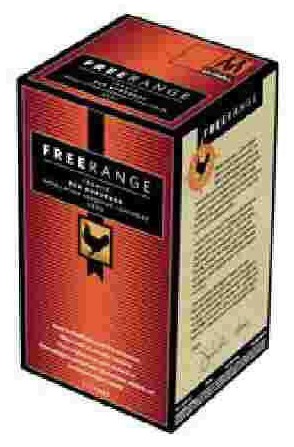
I'm still waiting for FreeRange wines to come to my part of the country, and now with even greater anticipation.

The Bordeaux Wine Bureau has just released it's latest list of 100 top Bordeaux. The list, entitled "Today's Bordeaux 2007," includes the FreeRange 2005 Red Bordeax, in a 3 liter bag-in-box package, from JuiceBox Wine Company. This Bordeaux is produced by Eric Dulong of Dulong Freres et Fils in his Saint Savin winery, using a blend of 60% Merlot, 30% Cabernet Sauvignon, and 10% Cabernet Franc.


The Selection Process: Today's Bordeaux were selected from more than 270 wines nominated by importers and retailers across the country priced $8 to $25 retail. In February 2007, the jury tasted all entries grouped by price in a blind panel. Wines were selected in the top 100 that were an excellent representation of Bordeaux within the given price range

The 2007 Today's Bordeaux Jury: Paul Chaconas, Bordeaux category manager for retailer Total Wine & More; Mark Oldman, author of the best-selling Oldman's Guide to Outsmarting Wine (Penguin Books); and Cat Silirie, Wine Director of Boston's No. 9 Park restaurant. Read more about this esteemed panel.

Today's Bordeaux: Top 100 Bordeaux


FreeRange wines (not to be confused with any bottle sporting a very large rooster) are only available in BiB packaging, and are available in the northeast US. JuiceBox tells me that they will be available in the southeast region this spring. Looking forward to it guys!!

Thursday, March 08, 2007

Boxed Wine Event on March 17

This Boxed Wine Picnic will take place on Saturday, March 17, 1:00 - 5:00 PM. Sounds like fun!

The Tucson Chapter of the American Wine Society is hosting a "boxed wine" picnic at a mystery location near Benson, Arizona. The wine will be paired with fried chicken and side dishes/desserts. We will coordinate car pools from Tucson and drive to the event location. Cost for this event is $15.00 (cash or check to AWS-Tucson). RSVP to admin@awstucson.bizland.com if you would like to attend. Please bring a side dish or dessert to share with the group, plus your own wine glasses and lawn chairs. There is no limit on attendance, so feel free to invite your friends to join the fun!

Tucson : Boxed Wine Picnic - Mystery Location


technorati tags: , , ,

Chateauneuf-du-Box

Now, I've heard of Chateau Cardboard, but this one is new to me. From The Top Kitchen blog.

Word of the Day: Chateauneuf-du-Box

Chateauneuf-du-Box is a Kitchenese play on words. It’s a silly and fancy way to say “wine in a box.” It’s referent, Chateauneuf-du-Pape, is a town in southern France that is known for producing a rustic red wine.

The Top Kitchen: Word of the Day: Chateauneuf-du-Box


technorati tags: , , ,

Wednesday, March 07, 2007

Ernest Gallo, 1909 - 2007

Ernest Gallo died yesterday at age 97.

E&J Gallo Winery is the largest wine company in the US, with annual US sales of 75,000,000 cases (2005 estimate, Wine Business Monthly). Among the wines in the Gallo family: Barefoot Cellars, Livingston Cellars, Red Bicyclette, Redwood Creek, Boone's Farm, Turning Leaf, Peter Vella (5 liter box), Carlo Rossi (available in a 4 liter box), Bella Sera, Black Swan (which also recently came out with a 3 liter box), and more.

From the Gallo website:

MODESTO, Calif. (March 6, 2007) – Ernest Gallo, who with his brother Julio, helped build the American wine industry and, in turn, achieved one of the greatest American business successes of the twentieth century, died today at his home in Modesto, California. He was 97. Julio passed away in 1993. Ernest had a younger brother, Joseph, who had his own business interests and passed away earlier this year.
. . .
The son of Italian immigrants, Ernest was born March 18, 1909, in Jackson, California, about 90 miles east of San Francisco in the Sierra Nevada foothills. His parents, Giuseppe (Joe) and Assunta (Susie), ran a boardinghouse for immigrant miners. It was not an easy life. After moving several times, in the early 1920s Joe bought a small farm in Modesto, California, about 70 miles east of San Francisco. Ernest and Julio, who was one year his junior, were required to come home directly from school to work in the fields, and they worked all weekend as well. It was here, in the late 1920s and the early 1930s, that the family’s grapes were harvested and loaded on rail cars for shipment to Chicago for sale to home winemakers, a small market dominated by immigrant communities in the big cities of the East and Midwest. By age 17, Ernest was already displaying his talent for salesmanship, traveling by himself to Chicago, where he was able to sell his family’s grapes and hold his own against older and wiser men. The experience instilled in him an independent, self-assertive nature and a fierce work ethic that remained with Ernest throughout his life.
. . .
The Gallo brothers pursued a dream few could ever envision. Their starting capital was limited to less than $6,000, with $5,000 of that borrowed from Ernest’s mother-in-law. In the first few years after Repeal in 1933, hundreds of companies were entering the wine business – more than 800 in California alone, some of them with extensive pre-Prohibition experience and access to millions of dollars. The brothers began without knowing how to make wine commercially. Ernest and Julio learned by reading old, pre-Prohibition pamphlets put out by the University of California and retrieved from the basement of the Modesto Public Library.
. . .
The sacrifice was often great. During the company’s infancy, the Gallo brothers often worked around the clock, sometimes 36 hours straight. In the first year, the winery produced 177,847 gallons of wine and earned its first profit. It became routine to work 18 hours a day, seven days a week. Although he cut back in recent years, Ernest remained active in the business on a daily basis until his death.

Gallo Public Relations


They founded the E.&J. Gallo Winery in 1933, at the end of Prohibition, when they were still mourning the murder-suicide deaths of their parents. Ernest and Julio rented a ramshackle building, and everybody in the family pitched in to make ordinary wine for 50 cents a gallon — half the going price. The Gallos made $30,000 the first year.

Winemaker Ernest Gallo dies at 97 - U.S. Business - MSNBC.com


technorati tags: , , ,

Tuesday, March 06, 2007

The Curse of Boxed Wine

For some wine drinkers, boxed wine is a blessing. Those who drink a glass a day appreciate how well it keeps after opening. Anyone putting on a large pool party appreciates the no-glass package, and the economy.

For some however, it's a curse, as J points out in Ashley's Big Secret Blog, excerpted here:

If you and a pal were to sit down for a nice evening of imbibing, you would pull out one bottle and drink it and, then, pull out another. Very likely you would go slowly on the second, as you have this, albeit imperfect, little voice in the back of your brain that warns you that opening too many bottles will lead to overload.

The inconvenient truth is that the benefit of the little voice telling you, “caution, caution” is completely defeated by the box. There is no way to tell how much of the box has been drunk in one sitting. So, without the little voice to warn you of impending doom, you drink and drink and it is very possible that you and your pal will not realize that too much has been consumed until you are slurring at each other or, dread, the box is gone!

I would like to propose a solution here.

Let’s publicize this problem. After all, many right-thinking people must be incensed by this irresponsible, unregulated and deceptive packaging. Perhaps someone could make a movie showing what can happen and suggesting, well, demanding would be better, that these insidious wine boxes have a gauge on them, like a gas gauge in a car to warn you of well, you know, that your $16 investment is about to pay you some unwelcome dividends.

Ashley's Big Secret Blog: An 'Inconvenient Truth' about Boxed Wine

It's true. And the fact is, I have lived in both those camps. I have friends whose aversion to boxed wine stems from the fact that it gives them no convenient stopping point, and they can't seem to put on the brakes.

The box will set you free. But whether that means free to stop at a glass or two, or free to keep going way beyond the point of immoderation, well, that's the question.

technorati tags: , , ,

Friday, March 02, 2007

Better Wine ,One Glass at a Time

In today's Portland State University Daily Vanguard, there's an article entitled Don't be afraid to explore the world of wine. Writer Matt Petrie's remarks about wine by the glass and box wines got me thinking once again about boxed wine in restaurant by-the-glass programs.

Wines by the glass bear some of the biggest markups a bar thinks they can get away with. A bottle that would retail for $10, for example, might sell for $6 by the glass. At about five pours per bottle, that's $30-a 300 percent markup. What's worse, usually the wines are crap. They might even be box wine.

Restaurants, and especially bars, assume that people who order wine by the glass just aren't that picky about what gets put in front of them as long as it's red or white (or, gasp, pink), so by-the-glass selections are usually where they stick the cheapest plonk they can find. Also, once a bottle is opened, the wine is exposed to air and begins to break down. A by-the-glass bottle sits around until it's gone. That means the wine you're drinking could have been sitting open for hours, or even days. You'll get better quality, and a slightly better price, if you find a friend or two to go in on a bottle.

Turning Red - Bar Guide

Heavens! Box wine? Say it isn't so!!!

Actually, the bag-in-box wine packaging is responsible for improving the quality of restaurant by-the-glass offerings, for two reasons.

First of all, after opening, the bag collapses as wine is dispensed. No air enters into the package and oxidation of the wine is prevented for many weeks after opening, unlike the opened by-the-glass bottle mentioned in the article.

Second, boxed wines are economical for several reasons. Of course, bulk buying is a better value; but bag-in-box packaging is also far cheaper to produce than a bottle and cork; and the bag-in-box wine is cheaper to ship and warehouse than bottled wine. (And, BTW, it costs less to recycle than glass). Because of the economy, a restaurant is able to offer a higher quality wine for the same price.

Take, for instance, FishEye Pinot Grigio, which gold medaled in the 2007 SF Chronicle Wine Competition (stacked up next to PGs selling for up to $25 per bottle). The FishEye PG in a 750ml bottle sells for around $8. The 3L box sells for $17 to $20. The restaurant can sell a glass of this stuff for the same price as some plonk in a bottle that retails for $4.25.

That's just the beginning. There are excellent imported French wines in 3L boxes that retail for $25 to $40 per box. In fact, DB Bistro on W 44th in NYC pours Dtour Chard which is only available in a 3L bag-in-"tube".

technorati tags: , , , ,