Sunday, November 26, 2006

Wine Cube Sauvignon Blanc 3 Liter Box

Another addition to our list of bag-in-box wines:

Wine Cube Sauvignon Blanc
From Target/Trinchero Family Estates
California, Napa
3 liter box, vintage dated
About $16

Naturally crisp and refreshing, with appealing herbal aromas and fruit flavors of citrus and green apple, Sauvignon Blanc is a sassy yet sophisticated sipper. This wine shines when it’s produced from cooler-climate coastal grapes. A wine for all seasons, it can be enjoyed poolside or fireside.
SuperTarget

technorati tags: , , , , , , ,

Saturday, November 25, 2006

More Party Wine Suggestions for Holiday Entertaining

From the San Francisco Chronicle, W. Blake Grey offers a number of wine recommendations for holiday entertaining, including three in 3-liter boxes. See the full article here.

Party wines that won't bust your budget
W. Blake Gray
Friday, November 24, 2006

The wines below will impress your friends with your good taste, without forcing you to tap deeply into your gift funds.

When one bottle isn't enough, bring a quality 3-liter box of wine.

Banrock Station and Black Box Wines are two good brands that sell for about $15 to $20 for the equivalent of four standard 750-ml bottles.

The 2006 Banrock Station South Eastern Australia Chardonnay ($18) is nicely balanced between lemon tartness and vanilla smoothness, and it's interesting enough to drink on its own. And the bag-in-box format prevents the wine from oxidizing, meaning the wine will stay good as long as four weeks -- if you can keep the party going that long.

Also consider:

2005 Banrock Station South Eastern Australia Shiraz ($18)

2004 Black Box Wines Paso Robles Cabernet Sauvignon ($18)

WINE / Party wines that won't bust your budget


technorati tags: , , , , ,

Wednesday, November 22, 2006

Boxed Wine Helps Make Holiday Parties Easy

From today's Journal (Martinsburg, WV) comes an article on boxed wine's convenience for holiday parties.

The focus on the plonk big three (Franzia, Almaden, Peter Vella), and the mention of Black Box and Trove almost as an afterthought has me thinking. Will we ever see a really good 5 liter box in North America? In France there is a great deal of decent AOC labeled and vintage dated wine in 5 liter bag-in-box packaging. We are still trying to buck the stigma of the box in any form; but will we ever buck the 5 liter stigma? I frequently find myself advising that the short rule-of-thumb is stay away from 5 liter, and choose 3 liter packages. But nonetheless, Franzia is still the biggest seller ever in the US.

Party in a box: Boxed wine helps make holiday parties easy
By Samantha Oester / Journal Staff Writer

MARTINSBURG — Boxed wine is gaining integrity. Previously thought to be a hokey substitute and for non-wine connoisseurs, wine in a box is becoming more popular and beginning to be held in higher prestige. Some fine wineries in the United States are even boxing their reputable selections.

“It’s more convenient than bottles of wine,” says Cheryl Perdue, a manager for Penn Liquors in Martinsburg. “Especially for parties, ... after you re-cork a wine bottle, it usually won’t fit in the fridge, but boxed wine sits neatly in the corner.”

Storage is actually one of the major benefits of boxed wine, not only its ease of being tucked away, but maintaining the freshness of the wine.

Inside a wine box is a vacuum-sealed bag containing the wine and it is tapped, which prevents oxidation of the wine. After a bottle of wine is uncorked, it can lose its freshness in a few days, but boxed wine stays fresh in its bag from four to eight weeks if tapped correctly.

(If the spout is opened when the box is on its side or upside down, however, it will oxidize the same as an open bottle of wine.)

Boxed wine is also usually cheaper per glass than most bottle wines, when compared to popular brands found at liquor and grocery stores.

“(Boxed wine) sells pretty good, and it’s really not bad,” says Perdue.

At Penn Liquors, the popular Franzia can be found. Regailed for its affordability, Franzia is sold in 5-liter boxes in a variety of reds, whites and blushes a little on the fruity side. (One 5-liter box is equivalent to about six and a half to seven regular bottles of wine.)

Franzia claims to stay fresh after tapped for six weeks and is made in California.

Also sold at Penn is Almaden, made in California and available in varieties of reds, whites and blushes, ranging from sweet to dry, and recently added a variety of sangrias. Almaden mostly sells a little more expensive than Franzia and is comparable to the brand.

Some wine retailers in the Eastern Panhandle, like Big Apple Liquors, have recently begun to sell higher end boxed wines and are waiting to see if they take on the popularity of the cheaper favorites. “I think they’ll sell pretty well,” says Sharon Bass, an employee at Big Apple. “Boxes are so much more convenient.”

Big Apple also sells Almaden, and Bass says Peter Vella, another comparable brand, sells very well. Among pricier boxed wines sold at Big Apple are Trove and Black Box, both sold in 3-liter boxes.

Black Box proclaims itself as half the price of bottled wine of the same quality and stays fresh for up to four weeks after opening. Sold in reds and whites, the California wine has won several awards at wine competitions, festivals and fairs.

Trove, sold in reds and white, claims the slogan “Premium wine by the glass.” This California wine stays fresh for up to a month after opening. Boasting rich flavors, Trove also claims to be cheaper per glass than wines of the same quality and to be one of the innovative brands transforming the boxed wine industry.

Big Apple also has 500 milliliter boxes of Vendange. A premium wine sold mostly in bottles, Vendange added these small boxes to their offerings in 2004. Containing a little more than three glasses per box (similar to a small bottle of wine), Vendange comes in lightweight containers meant for convenience (no corkscrew necessary, like other wine boxes) or to be given as gifts. Vendange boxes offer reds and whites.

While better wines are getting bagged and boxed, leaving out the cork and taking on cardboard, data released by the industry indicates a growth of three-liter boxed wines by 29 percent in 2005, with monetary figures increasing by more than 60 percent.

High-quality boxed wine is old news in Europe and Australia and steadily increasing in the United States. But whether a high or low-price tag, boxed wine could be a better bet for parties, dinners or even tailgating in style, with lower prices for the quality, convenience of serving and storing and longer-lasting leftovers.

The Journal


technorati tags: , , , , , ,

Tuesday, November 21, 2006

SF Chronicle Reviews Boxed Merlots

Here's another good article from the past out of my file drawer. Last month, I pulled out of my files an article from the San Francisco Chronicle. Last March in 'Volvo' Vino: Boxy but good, W. Blake Gray recommended three Chardonnays in boxes. Not to ignore the red wine lovers among us, a month later he looked at Merlots. In Think inside the box for inexpensive Merlots, Gray lists three in boxes worthy of mention. They were: Black Box Sonoma County Merlot; 2003 Black Box California Merlot, and 2004 Delicato Merlot.

Last month, I wrote about Chardonnay, some of it in boxes, and the main response I got from readers was, "What about boxes of red wine?"

You ask, we deliver. Well, not literally. You'll have to go to the store yourself to pick up any of this week's recommended bargain wines. But if you're a Merlot fan, it'll be worth the trip.

Despite flat sales growth, Merlot is still America's favorite red varietal, and second-favorite wine overall, after Chardonnay.

Merlot sales in large U.S. food stores actually dropped 0.2 percent over the last year, according to ACNielsen, while overall table wine sales climbed 3.3 percent. But Americans still bought about 60 percent more Merlot than Shiraz, Pinot Noir and Zinfandel (not the pink kind) combined.

Bowing to the market, I tasted 35 bargain-priced Merlots from eight countries recently; these were the best 10 wines.

My very favorite came in a box. The nonvintage (NV) Black Box Wines Sonoma County Merlot ($24 for 3 liters) is an outstanding wine for this price range; a true bargain superstar. While $24 may not seem cheap, consider that the box holds the equivalent of four standard 750 ml bottles. This wine is both fruit-forward and complex, with flavors and aromas of black and red berries, a floral note and a measured touch of oak. The fruit tastes more red than black on the medium-long finish. Plenty of $24 bottles of Merlot aren't as good as this.

I also liked the 2003 Black Box Wines California Merlot ($18 for 3 liters), which was earthier and a bit sweeter than the Sonoma County version.

The winery's Web site, blackboxwines.com, has a nice summation of some of the advantages of boxed wines, including the fact that the wine can stay drinkable up to four weeks after opening because it's contained in a vacuum pack inside the box which deflates each time you draw a glass. The site also answers that ever-popular question "Where can I buy this wine?" with a search bar that lists California stores in locations from Alameda to Yuba City.

Wine in a box is more an accepted part of daily life in Australia than in the United States, so it's no surprise to find a good boxed Aussie Merlot. The 2004 Banrock Station South Eastern Australia Merlot ($18 for 3-liter) is simple but easy to drink, with a smooth, mild blackberry flavor.

In sampling boxed wines, one thing I keep discovering is that for whatever reason, they often taste different than the bottled versions.

Case in point: The 2004 Delicato Family Vineyards California Merlot ($7) in a bottle tastes of slightly sweet red fruit -- strawberries and red currant. In contrast, the 2004 Delicato Family Vineyards California Merlot ($18 for 3-liter box) is much oakier and more tannic, with flavors of blackberry and wood and decent acidity.

Delicato also owns the Monterey-based Monterra label. The 2004 Monterra Monterey County Merlot ($9) in a bottle offers sweet cherry flavors with oak and slightly gripping tannins; a simple but decent wine.

I tasted some other boxed Merlots, but they didn't make the cut, and our Wine section policy is to not write about wines we don't like. Fortunately, I found plenty of good Merlots in bottles to recommend.

The 2004 Fusee California Merlot ($6), from Sonoma negociant Don Sebastiani & Sons, is my second-favorite wine on this week's list. It definitely shows the effects of oak, with flavors and aromas of blackberry, cedar and lots of vanilla, but it's a whole lot of bold flavor for less than the price of a matinee movie ticket.

California's McManis Family Vineyards caused a stir in Europe recently when winemaker Jeff Runquist admitted to Agence France-Press that he uses oak staves and nylon mesh "tea bags" of oak chips to flavor his wines, rather than the traditional practice of aging them in barrels. The use of oak chips was at the heart of a recent wine trade agreement between the European Union and the United States, in which Europe basically caved to American negotiators and recognized the technique as legitimate. Runquist's unapologetic admission gave European wineries a person to criticize, rather than a method.

To which I say, hey, whaddya expect for $10? Sure, I'd rather drink a hand-harvested, barrel-fermented wine than a factory-processed, flavor-manipulated wine. But I'd also expect to pay $18 or more for it, and many people can't afford to spend that every night. Plenty of other wineries competing in this price range are doing what McManis is; I commend Runquist for his honesty.

Moreover, now I understand why all McManis Family Vineyards wines taste similar, regardless of grape variety. At least they're onto a formula that works. The 2004 McManis Family Vineyards California Merlot ($10) is like most of the Ripon winery's red wines: rich, enticing aromas and flavors of cherry and vanilla. Those of you who decry the international style of winemaking, avoid it. But for people who just want a delicious wine at a good price, it delivers. And McManis is hardly corporate; this is a family-owned, family-run winery competing with the big guys by using the same tools.

Speaking of the big guys, it's easy for longtime enophiles to make fun of Constellation's silly critter label 3 blind moose, but the world's largest wine company is doing the industry a service by wooing young drinkers away from beer and sweet cocktails with these easy-to-drink, slightly sweet, entry-level wines. The 2003 3 blind moose California Merlot ($10) is typically simple but drinkable, with flavors and aromas of cherry, cherry candy and red currant.

You don't expect to see Merlot from Italy, but the huge American market for the varietal has driven growers there to plant it, and the 2004 La Francesca Delle Venezie Merlot ($7), with a cherry flavor and slight herbaceousness, shows it can be a decent value.

Once you start bowing to the market, it's hard to know when to stop. I could decry the internationalization of Italian wine, as the country makes so many wonderful varietals of its own that it has no need for Merlot.

But if Europeans have to live with American oak chips, Americans should accept Merlots from Italy -- until Merlot sales go from "flat" to "plummeting." Unless there's a sequel to "Sideways," Merlot will probably stay America's favorite red wine for a while. We might as well pick the good ones -- even if they come in a box.

Think inside the box for inexpensive Merlots


I love Gray's reviews. He appreciates the place affordable wines have in the world, and has no "box" phobia.


technorati tags: , , , , , , , ,

Monday, November 20, 2006

Stonehaven Shiraz Review from the Box Wine Guy

Today the Box Wines blog posts a review of the Stonehaven Shiraz in the 3-liter box from South Eastern Australia. I haven't seen this one in my part of the US yet, but I will definitely keep an eye out for it, because the Box Wine Guy rates it highly, giving it 8.5 points out of 10. Sounds excellent, and a bargain to boot! Here's what he had to say (be sure to see the entire review at the Box Wines blog).

The nose of this medium-bodied Shiraz is mostly cherry fruit. The wine’s flavor has cherry and plum notes, with some of the expected pepper and a hint of vanilla. The finish adds some oak. The tannins are balanced, and for an inexpensive wine, this Stonehaven Shiraz has good structure.

Wines » Stonehaven Shiraz - Box


technorati tags: , , , ,

Sunday, November 19, 2006

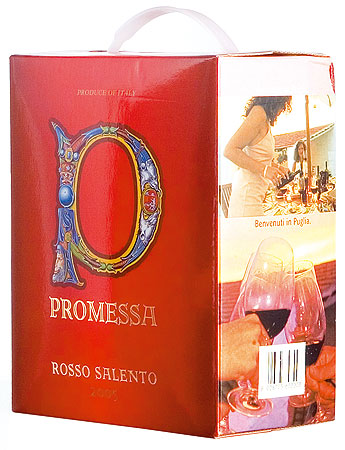
Promessa Rosso Salento 3 Liter Box

From Italy, another addition to our list of bag-in-box wines:


Promessa Rosso Salento
Fusione (Mark Shannon & Elvezia Sbalchiero)
Italy, Apulia (Puglia)
Negroamoro (85%), Primitivo (15%)
3 liter box, vintage dated (also available in bottle)
About 17 euro (Germany)

No website found. Tasting notes from Bennetts Wines (UK) and Noel Young Wines (UK)

The wine shows fruitiness and silkiness on the palate, with notes of plum, raspberry, cherry, vanilla and toasted hazelnut.

Bennetts Booklet


Ripe berry fruit, quite warm and spicy with some creamy oak. It's full of brambly fruit, easy drinking and soft. The oak is a little confected and there is a slight odd 'tizer' like character, boiled sweets. It's hard to fault it though because it's a big juicy mouthfull and well priced, it just seems at this stage to be a little confected.

Noel Young Wines - Award Winning Suppliers of Fine Wines


Saturday, November 18, 2006

Boxed Wine at Turkey Training Camp

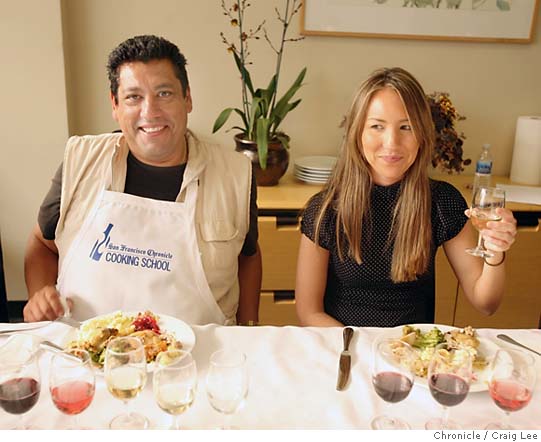
The San Francisco Chronicle has always been marvelously open to including boxed wines in it's food and wine pages. Yesterday Stacy Finz included a box, the 2005 Black Box Wines Monterey County Chardonnay, among six wines chosen by the Chronicle's wine writer, W. Blake Gray for sampling at the SF Chronicle's Turkey Training Camp. The five Chronicle readers who participated in the camp favored the Riesling, and were apparently underwhelmed by the Black Box Chard.

TURKEY TRAINING CAMP
Riesling wins trainees' favor
Stacy Finz, Chronicle Staff Writer

. . .
We figured that while we had them here, we'd use them as guinea pigs to test wine that our expert W. Blake Gray chose to pair with our menu of turkey, mashed potatoes, dressing, vegetables and cranberry sauce.

With all those textures and flavors, finding the right wine is not easy. So Gray chose six:
  • 2005 Chateau Ste. Michelle & Dr. Loosen Eroica Columbia Valley Riesling ($20)
  • 2004 Castle Rock Lake County Sauvignon Blanc ($10)
  • 2005 Black Box Wines Monterey County Chardonnay ($22 for a 3-liter box)
  • NV Gallo Family Vineyards Twin Valley California White Zinfandel ($5)
  • 2004 Frog's Leap Napa Valley Zinfandel ($25)
  • NV Fox Creek Vixen McLaren Vale Sparkling Shiraz ($20)
He selected wines he thought would most complement the food, but were still affordable enough for entertaining large crowds. He chose the Riesling and White Zin because their sweetness balances well with Thanksgiving fare, the Sauvignon Blanc because it goes well with green vegetables, and the Chardonnay because of its value. The Zinfandel was a symbolic choice -- America's traditional holiday deserves the grape that's most associated with the United States. The sparkling Shiraz is both a fun wine and a great Thanksgiving pairing, and Aussies drink it with their turkey.

Gray suggests serving a few different varietals at dinner so there is something for everyone.

As members of our training camp sampled the meal they had slaved over, they swirled and sipped the wines. We didn't tell them what they were drinking, hid the boxed wine and disguised the bottles in brown paper bags.

Unequivocally they picked the Riesling as their top choice.

. . .

And no one seemed too impressed with the boxed Chardonnay. But at that price they may rethink it.

TURKEY TRAINING CAMP / Riesling wins trainees' favor


technorati tags: , , , , ,